
Organ Donation

The Living Bank is focused on confronting the critical shortage of organs that are available for life-saving transplants. By raising public awareness of the need for donations – especially those from living donors – we are helping people get transplants in months instead of years, enabling them to enjoy a more active and independent life.

Why Donate?

There are more than 116,000 individuals on the National Transplant Waiting List in need of a life-saving transplant. During 2016 only 28 percent received their second chance at life.

Individuals on the National Transplant Waiting List are currently waiting up to 10 years for a transplant generally from deceased donors, often causing lengthy delays.

At The Living Bank, we focus on living organ donation where the need is most critical.

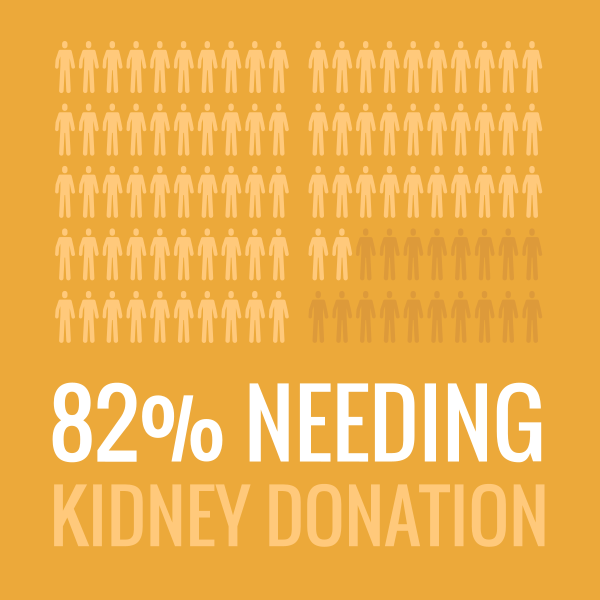
  • Kidney. This is the most common living donor transplant, as 82 percent of those on the national transplant list need a kidney
  • Liver. Among patients waiting for an organ, 13 percent need a liver

95 percent of those waiting could potentially be treatment now through living organ donor transplantation.

Instead of waiting, living donor transplants offer a faster, equally effective option for transplant patients.
Living Donation

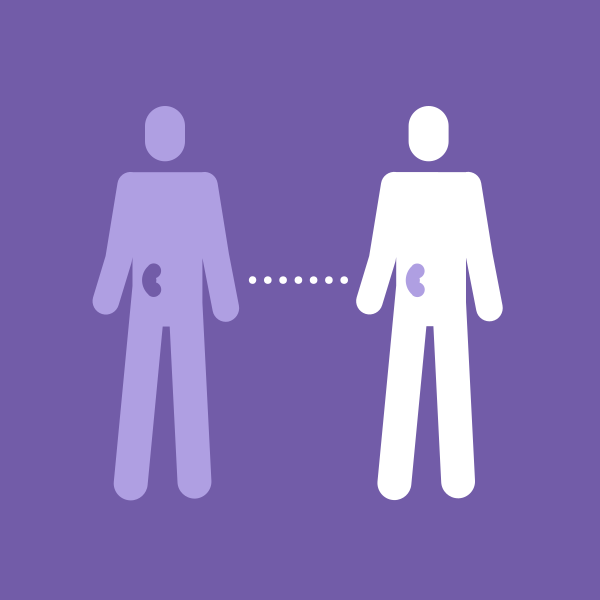
Living organ donation first emerged in 1968, when a kidney from one twin was successfully transplanted into his brother. It has become an increasingly important way to help confront the shortage of organs available for transplants, reduce wait times for recipients, and give people a second chance at a fuller, more independent life.

There are three categories of living donations:

  • Directed. Donors specify to whom they want to donate an organ. They can include biological relatives; a biologically unrelated individual connected to the potential recipient, such as a spouse, friend, or co-worker; or a biologically unrelated person who has heard about someone in need of a transplant.
  • Non-directed (altruistic). Donors give to an anonymous recipient on the national waiting list. The match between donor and recipient is based on medical compatibility.
  • Paired. This involves two or more pairs of living kidney donors and recipients who are not medically compatible. The transplant candidates “trade” donors so that each receives an organ from someone with a matching blood type.

Deceased Donation

The vast majority of transplants come from organs or parts of organs that are donated at the time of the donor’s death. Because there is a short of available organs and an ever-lengthening waiting list, most people have to wait years for a transplant.

For an individual to become a donor, blood and oxygen must flow through the organ until the time it is recovered. This requires that the potential donor die under circumstances in which an irreparable neurological injury has occurred – typically massive brain trauma such as a stroke, aneurysm, or car accident.

Anyone can be a donor, regardless of their age, race, or medical history, and all major religions in the United States support organ donations. The length of time spent on waiting lists is a function of the severity of the candidate’s condition, time already spent on the list, blood type, and relevant medical information.

Whole Body Donation

Whole body donation helps medical researchers and doctors to research and identify better ways to treat a comprehensive range of illnesses and conditions. Whole body donors contribute to advances in medical and physician training; development of surgical procedures; treatment breakthroughs in areas such as gynecology, colon and liver illness, diabetes, and HIV; improved understanding of how diseases progress; development of life-changing medical devices; cancer protocols; treating spinal injuries; and enhanced drug delivery mechanisms.

keyboard_arrow_up